

Delta Works: Testing for Safety in a Critical Infrastructure Upgrade
In short: Nekst IT tested the new operating software of the Maeslant storm barrier, part of the Delta Works. With no industry standard to follow, our test specialist used a risk-based test strategy (TMap), a controlled DTAP environment and SCRUM, and had the barrier’s operators test under guidance in a realistic test environment.
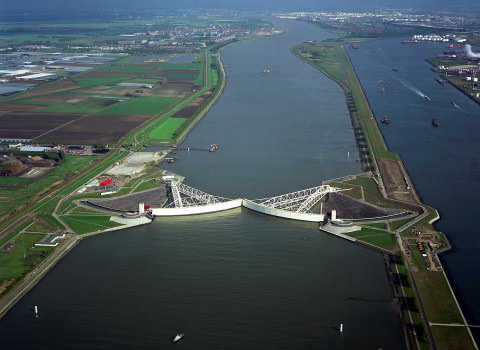
The Maeslant storm barrier is part of the Netherlands’ world-renowned Delta Works and is managed by Dutch authorities. As the world’s largest moving structure, effectively the world’s largest robot, it can close the Nieuwe Waterweg to protect the Randstad from catastrophic flooding. This case is about testing its new operating software.
The challenge
The Maeslant barrier is a one-of-a-kind structure. There is no industry standard for designing or testing its operating software, and the consequences of failure are immeasurable. Developing new operating software required:
- extremely high quality standards
- a robust, risk-based testing framework
- validation under all conceivable operational and environmental conditions
The challenge was to ensure absolute reliability for one of the most critical flood protection systems in the world.
Technology and approach
To meet these requirements, a structured and methodical testing strategy was put in place:
- TMap (Test Management Approach): a risk-based testing framework, so the highest-risk components received the most intensive testing.
- DTAP (Development, Testing, Acceptance, Production): a controlled environment strategy for predictable, traceable and safe software progression.
- SCRUM: iterative development, better planning, faster feedback loops and better alignment between developers, testers and stakeholders. This was a significant innovation for the sector.
What we did
Our test specialist played a central role in validating the new operating software, with a collaborative and risk-driven approach.
1. Structured test design
- Tests were defined based on risk levels and client requirements.
- High-risk scenarios received deeper, more intensive testing.
- TMap and DTAP ensured consistency and traceability.
2. SCRUM in industrial automation
- Brought agility to a traditionally waterfall-driven environment.
- Enabled iterative testing and continuous improvement.
- Improved communication between all disciplines.
3. Close collaboration with stakeholders
- Frequent consultations kept everyone aligned on goals, risks and methods.
- Stakeholder involvement increased ownership and transparency.
4. Testing by the operators
- The barrier’s operators (the end users) executed tests under guidance.
- Testing took place not only on the final product, but also while the A-environment was being built.
- External influences were simulated to mimic real-world conditions.
5. Comprehensive scenario testing
- The barrier was tested against every conceivable operational scenario.
- Unit and system testing methods were evaluated and refined.
- The test strategy evolved continuously based on the findings.
The result
- Reliable software: the new operating software met the highest safety and reliability standards, able to handle extreme and unpredictable conditions.
- Effective collaboration: continuous communication kept the testing process smooth and coordinated.
- A new way of testing: introducing SCRUM into industrial automation set a new benchmark for agile testing in critical infrastructure.
- A realistic test environment: simulated real-world conditions in the A-environment made sure the software was ready for deployment.
The project shows what structured, risk-based testing combined with an agile way of working can do for safety-critical infrastructure.
Testing software that steers machines or infrastructure?