

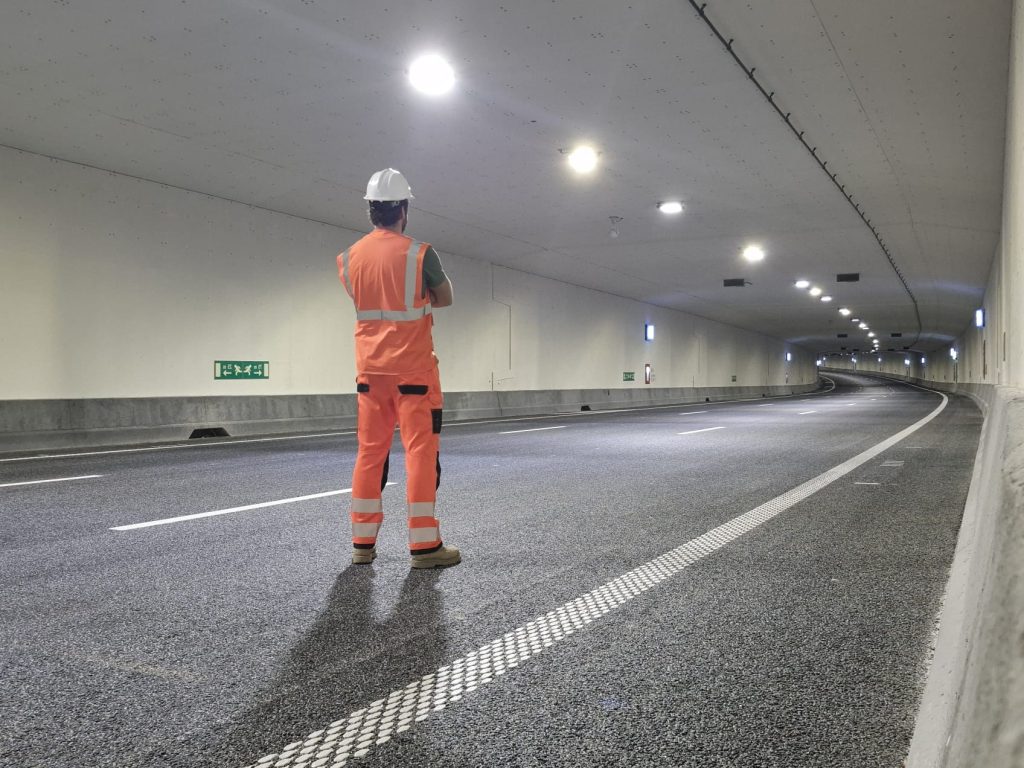
Testing the Blankenburg Connection
In short: Nekst IT carried out hardware and software integration testing for the Blankenburg Connection, the new link between the A15 and A20 near Rotterdam. In a purpose-built test facility that replicated production, we tested tunnel, traffic and monitoring systems as one chain, including failover and emergency scenarios.
The Blankenburg Connection is one of the Netherlands’ most significant infrastructure projects, designed to improve traffic flow and regional accessibility by connecting the A15 and A20 near Rotterdam. Delivered through a public-private partnership between Rijkswaterstaat and BAAK (Ballast Nedam, DEME, and Macquarie), the project relies heavily on advanced IT systems for traffic management, tunnel safety, and real-time monitoring.
To ensure these systems operated safely and reliably, Nekst IT played a key role in conducting extensive hardware and software integration testing throughout the project.
The challenge
1. Large-Scale System Complexity
The Blankenburg Connection integrates numerous subsystems, including tunnel installations, traffic control systems, and monitoring platforms, all of which must function smoothly together. Nekst IT was responsible for validating both individual components and the full end-to-end system chain.
2. Strict Safety and Reliability Requirements
Tunnel and traffic systems must meet exceptionally high safety standards. Any malfunction can directly impact road user safety, making thorough testing, including failover and emergency scenarios, essential.
3. Multi-Stakeholder Collaboration
The project involved close coordination between Rijkswaterstaat, BAAK, technology suppliers, and engineering partners. Aligning test processes, documentation, and planning across all parties was crucial to maintaining quality and consistency.
Testing approach and technologies
Dedicated Physical Test Environment
Nekst IT worked within a purpose-built test facility that replicated the production environment as closely as possible. This allowed for realistic testing of integrated hardware and software components.
Scenario-Based and Simulation Testing
The team executed a wide range of scenarios, including:
- simulated equipment failures
- emergency tunnel situations
- input/output variations
- real-world traffic conditions
These simulations ensured that systems behaved predictably under all circumstances.
Redundancy and Failover Validation
Many critical systems include redundant components to guarantee uptime. Nekst IT performed extensive failover testing to confirm that backup systems activated instantly and without disruption.
Key outcomes
1. High System Reliability
Integrated systems demonstrated stable and consistent performance, with only minimal issues identified during testing.
2. Verified Safety Readiness
All safety-critical systems were validated against emergency and fault scenarios, confirming readiness for real-world operation.
3. Increased Stakeholder Confidence
The successful test results strengthened confidence among Rijkswaterstaat, BAAK, and all project partners in the operational reliability of the Blankenburg Connection.
The Blankenburg Connection highlights the importance of rigorous IT testing in large-scale infrastructure projects. Through close collaboration and a structured testing approach, Nekst IT ensured that all systems met the highest standards of safety, reliability, and operational performance.
This case study demonstrates how professional integration testing contributes to the successful delivery of complex, safety-critical infrastructure, and the value Nekst IT brings to such projects.
Testing software that steers machines or infrastructure?